

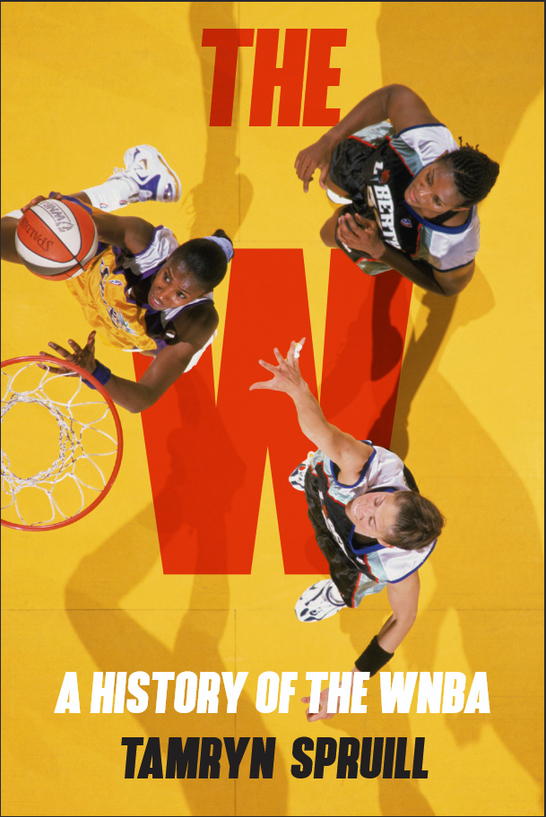

By Tamryn Spruill
The 2026 WNBA regular season should have been celebratory. The professional women’s basketball league turned thirty this season and is sitting at the apex of mainstream culture. The league came out of the 2020 bubble season of pandemic and protest with new power, and after decades of struggle, the players’ union, under the leadership of Nneka Ogwumike, negotiated a transformative collective bargaining agreement this past spring. The players won an immediate surge in pay, salary cap flexibility to replace injured players and an exemption for pregnancy and childbirth, a provision disallowing teams to trade pregnant players without their consent, and remarkably, one-time recognition payments to former players who’d built the W and retired with little to show for their contributions. Two expansion teams are in play this season, Portland Fire and Toronto Tempo; another enters the fray next year, the Cleveland Sirens. And there are more games to watch: After being stuck on a thirty-four game season from 2003 to 2019 and thirty-two in 2021, the number of games in WNBA regular season has climbed to forty-four this year, with plans to reach fifty in 2027 and fifty-two in 2029. Despite these achievements, and electric performances on the court, few in the WNBA orbit seem to be in a partying mood.
There is a palpable joyless pall hanging over the 2026 season for reasons as simple as the white supremacy at the heart of the country’s founding. The WNBA is increasingly popular, but bandwagon fans to the WNBA cling to the notion that this popularity results from the arrival of one player alone: Caitlin Clark, the latest of the white hopes. Like countless rookies before her, Clark has had to adjust to the physical play in the W, which players themselves call the most competitive league in the world. The same people calling physical plays on Clark “assault” are the same ones who admittedly never watched a WNBA game until her arrival. If they had, they would’ve seen Yolanda Griffith rocking a shiner into Game 3 of the 2009 WNBA Finals, which she and the Sacramento Monarchs won along with the championship, or Brittney Griner sidelined in 2014 with an eye injury that required surgery, thanks to a meeting with Sylvia Fowles’s elbow. Basketball is, after all, a contact sport.
Singling Clark out as a victim disrespects her game, the same way that cherry-picking players to promote based on subjective, biased beauty standards rather than their on-court accomplishments and skills is in insult to the game overall. Pointing out the privilege of some players isn’t an attack against them personally, though; it’s a criticism of the systems of power that now seek to tear apart a league that it views as having grown too big for its britches.
Those fans who weren’t paying attention before Clark have a lot of catching up to do. Back in 2020, the players drove Atlanta Dream owner Kelly Loeffler out of the WNBA after she objected to the players’ alignment with Black Lives Matter in the wake of the police killings of George Floyd and Breonna Taylor. In their bid to rid the league of Loeffler, a Republican senator by appointment who was campaigning for reelection, the players began wearing warmup tees bearing the name of her rival: Rev. Raphael Warnock. Until the players got involved, Warnock was struggling to fund his campaign, and his low poll numbers showed it. He went on to win the senate seat for Georgia, helping give Vice President Kamala Harris the tie-breaking vote in the U.S. Senate.
Now, there is hell to pay, because the U.S. is nothing if not backlash-happy to progress and efforts to lift the country toward its own ideals and constitutional guarantees. Sexism, misogyny, homophobia, and racism kept the WNBA on the cultural sidelines, despite the arresting action happening on the league’s courts—the milestones made, records broken, championships won. The league’s women—who put “the W” in WNBA—overcame every obstacle to achieve visibility. Now that it mainstream culture, the WNBA is again on a shaky footing—a precarity mirroring the instability of U.S. democracy.
Suddenly, people in the league and outside of it are performing concern for the well-being of girls and women. The WNBA has moved from surviving to thriving, and like the social safety nets for women, immigrants, people of color, the LGBTQ+ community, poor people, and any group traditionally shunned from the benefits of patriarchy and white supremacy, it is being hacked away at.
The cruelest part is that the attack is coming from the inside. WNBA Commissioner Cathy Engelbert has failed to unequivocally address racial and homophobic abuse of players, and come up short in addressing the issue of trans athletes, which has left space for attention-seeking ne’er-do-wells to make a mockery of trans lives and the league. A lesson could be taken from former NBA Commissioner David Stern, who in the late-1990s turned Magic Johnson’s HIV diagnosis into a national education on the virus. Engelbert instead seems to hope derogatory narratives will pass by rather than asserting counternarratives. Rather than deal with any of it, she announced on September 4 that she’ll resign at the end of the year.
Engelbert has also followed Trump’s attacks on Massachusetts by strong-arming the Mohegan Tribe into selling the Connecticut Sun to Houston Rockets owner Tilman Fertitta, the Trump-appointed Ambassador to Italy and San Marino. A minority owner of the NBA’s Celtics offered the Mohegan Tribe more money for the franchise, which would’ve moved the team to Boston; he sweetened the offer by allocating an additional $100 million towards building the team its own practice facility. Engelbert refused to engage him in talks, even though the fan base—which sold out the storied TD Garden two years in a row—had proved the strength of the market.
Stripping a six-state geographical region of its only professional women’s basketball team doesn’t grow the game, as Engelbert has maintained is her goal. But ridding New England of its only WNBA team and installing a second in Texas, into the hands of a fellow Trump acolyte, however, smells something like political payback.
The WNBA, b. Some folks are rankled by the players’ success, precisely because they need them to be at the bottom of the social hierarchy so that they feel better about themselves and their own lives. Hating on others doesn’t solve problems or put money into one’s pockets, and it takes a wrecking ball of humility to admit that one has been taken for an ideological ride. As for the WNBA, it won’t withstand the current backlash unscathed without a common goal, with each player contributing toward its end.
For decades, the players needed the WNBA to survive long enough to give it a chance mainstream legitimacy. Now that that work has been done, the players must identify a collective mission around which to galvanize and drive the league beyond this moment, into a healthy and joyful future. The younger white players in the WNBA must come to embrace that what happens to their Black, BIPOC, and queer counterparts impacts the health of the league, and thus, their own platforms and livelihoods. They most stand with their peers.
This season, NBA Commissioner Adam Silver came to Clark’s defense—calling her a player who just wants to improve her game, singling her out for protection, but having little to say about the Black players who are being called the n-word or homophobic slurs—who just want to live, improve their games, and not be a dumping ground for people’s hate.
After South Carolina defeated Iowa in the 2024 NCAA title game, Coach Dawn Staley, in her infinite wisdom, thanked Clark for her contributions to women’s basketball, and acknowledged the “burden” of the Hawkeye’s meteoric rise. People perhaps didn’t know what Staley meant, not even Clark herself. Now, the picture is coming into clearer focus. Just as Engelbert still has the chance to foster national understanding about trans lives the way Stern did for HIV, the players can seek to understand each other’s burdens, and the external sources from which most of them derive.
To make it beyond this moment, the players also will need a union president with the brains, negotiating power, and tenacity of Ogwumike, who will be retiring after this season. It wouldn’t hurt their cause if, in the next CBA round, players fought for a vote on who gets to own a team. Wealthy NBA players, media moguls, and entertainment icons who sit at the baseline, taking the spotlight from the players on the court, should be challenged to invest in teams rather than an orange hoodie alone. In many ways, the work for WNBA players is, unfairly, just beginning. The league is no better fitted to survive indifference and apathy any more than U.S. democracy was.
Did you enjoy this screen?

Please show your appreciation with a tip in any amount.
Every cent will be put to good use and help to keep the screens coming.
Thank you!
Path To Publication:
This article was originally pitched to TIME magazine and The New York Times. On September 15, 2026, TIME passed on the submission. As the 2026 WNBA regular season was wrapping up, I made eleventh-hour pitches to HuffPost and The Guardian US, but did not hear back before the start of the playoffs—the ideal time to publish such a piece. The New York Times did not respond to my pitch. On September 26, 2026, the Times published a similarly-themed essay and video by its Opinion writer, Roxane Gay.